
The Little Boy Who Told Me I Had a Big Face
I once had a pediatric hospice patient tell me I had a really big face.
Not a big heart, or a beautiful smile. A big fucking face.
Part of my hospice assignment involved seeing pediatric patients because I’d previously worked in pediatric home health. People tend to associate hospice exclusively with dying, which is understandable, but something that often gets lost is how much living still happens along the way. Children receiving hospice care are still children. They want to play, tell stories, ask questions, and occasionally roast the absolute shit out of an unsuspecting adult.
This particular little boy and I were sitting together playing cars and talking about whatever came to mind. We were having a perfectly lovely time when he suddenly looked up at me.
“Nurse?”
“Yes, baby?”
“You have a really big face.”
Well, goddamn.
There were several family members in the room, and some of them had to leave because they were laughing so hard. His mother immediately tried damage control.
“He does that to me, too!”
Bless her heart. She was trying to make me feel better.
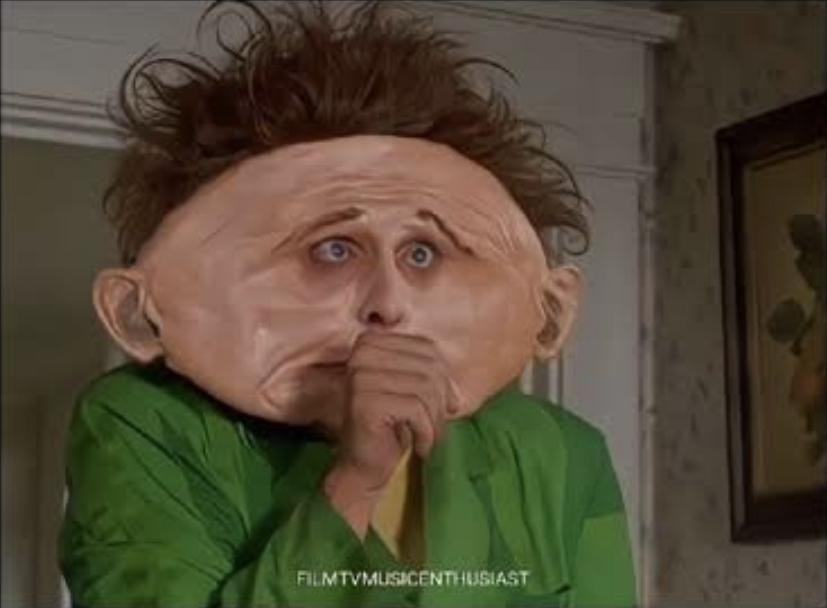
Meanwhile my brain went straight to Drop Dead Fred—the scene where Fred gets his head slammed in a door and comes out looking like somebody flattened his skull into a dinner plate. And suddenly I’m sitting there wondering whether I’ve been walking around my entire adult life looking like that dinner-plate-ass motherfucker. Nobody thought to mention it before?
Several years have passed, and I still laugh when I remember that afternoon. I’ve done enough work on myself to be comfortable with who I am, including whatever apparently remarkable acreage my face occupies. I wasn’t offended. If anything, I admired the complete absence of hesitation. He noticed something about me, thought it was worth mentioning, and carried on with his day.
There’s a particular kind of magic in working with children as a nurse. They invite you back into a world you’ve long since outgrown, where ordinary things are still fascinating and an afternoon spent playing cars can be an adventure. Some children have a light about them that’s almost impossible to describe. This little boy was one of them.
I’ve often thought about how remarkable it is that joy can exist in circumstances so profoundly sad. I don’t want to romanticize childhood illness or suggest that children facing death are somehow immune to fear or suffering. They aren’t. But I witnessed moments when the weight of what was happening seemed to fall away, and a child could simply enjoy being alive.
That afternoon, this little boy wasn’t contemplating the unfairness of his circumstances. He was playing cars, enjoying the company around him, and apparently conducting an informal assessment of his nurse’s facial proportions. His illness hadn’t taken away his personality. He was dying, certainly, but he was also very much alive, and he had no intention of postponing the business of being a little boy simply because his circumstances were tragic.
The room was full of laughter, and for a few minutes, that was enough.
When I think about my years in bedside nursing, these are the memories that tend to surface. Rarely the procedures or the endless documentation. I remember conversations that had nothing to do with medicine, families who welcomed me into their homes, and patients who managed to teach me something about living while I was supposed to be helping them through an illness. Some of the funniest people I’ve ever met were patients. Some of the wisest, too.
There was an intimacy to that work that I haven’t found anywhere else. You could walk into a stranger’s life during one of its most difficult chapters and, through the ordinary business of caring for them, develop a connection that stayed with you long after the assignment ended. I loved that part of nursing more than I can adequately explain, and I miss it.
Admitting that has become complicated because I’ve also accepted that I cannot return to the bedside. My experiences working in a violent healthcare environment left me with psychological injuries that changed what I can safely tolerate. I’ve spent a great deal of time coming to terms with that reality, and I know myself well enough now to recognize that returning would jeopardize the stability I’ve worked so hard to regain.
That knowledge doesn’t make the decision painless.
Until recently, I don’t think I’d fully appreciated how much grief was involved. I’ve been so focused on surviving what happened, rebuilding my life, and finding another professional direction that I haven’t spent much time mourning the parts of nursing I genuinely loved. There’s something particularly difficult about having to walk away from a profession that still means so much to you. It’s one thing to leave because your interests have changed. It’s another to realize that the work you once found so fulfilling has become inseparable from experiences your mind and body can no longer endure.
For a long time I thought I needed to find something that would replace it. I’ve pursued patient advocacy, continued my education, and explored different possibilities. Those experiences have been meaningful, and I believe there are opportunities ahead of me that I haven’t even considered yet. Still, every so often a memory like this one comes along and reminds me of what I left behind.
The strange thing is that I can be perfectly content with my decision and still feel sad about it. I’ve been treating those feelings as though one must invalidate the other, when perhaps they’re simply different parts of the same experience. Leaving was necessary, but necessity doesn’t make something less worthy of mourning. I can acknowledge how much nursing gave me without minimizing what it eventually cost. The years I spent caring for patients weren’t erased by the circumstances that brought that chapter to an end. Nor do I owe the profession any further sacrifice simply because I once loved it.
There’s a freedom in recognizing that, although it’s taken me a while to arrive here.
And strangely enough, I find myself thinking about that little boy again.
What I’ve come to appreciate about that afternoon is that he wasn’t waiting for his circumstances to improve before allowing himself to enjoy being alive. He was dying, and he was also busy living—playing cars, talking, laughing, making observations about the world around him. His illness was part of his life, but it wasn’t the entirety of it.
I think there’s a lesson in that which extends far beyond childhood illness. Life doesn’t always offer us the luxury of waiting until everything is right before we begin enjoying it. Sometimes sorrow is simply the backdrop against which the rest of our lives unfold. There can still be laughter, curiosity, connection, and moments of ordinary happiness, even when the circumstances surrounding them are anything but happy. Finding joy in those moments, without requiring the sorrow to disappear first, is its own kind of freedom.
I didn’t understand the significance of what I was witnessing that afternoon. I was simply a nurse sitting on the floor playing cars with a little boy who thought my face was unusually large. Yet here I am, years later, finding myself drawn back to that memory as I try to make sense of my own losses.
And perhaps this is how our patients live on inside us. They become part of the way we understand the world. Their stories influence our choices, their words return to us unexpectedly, and sometimes, long after we’ve cared for them, we discover that they’re still teaching us something.
We talk a great deal in nursing about the difference we hope to make in our patients’ lives. I wonder whether we spend nearly enough time acknowledging the difference they make in ours.
I entered the profession because I wanted to care for people, to be useful in moments of suffering, and to offer whatever comfort I could when circumstances were beyond anyone’s control. What I hadn’t anticipated was how much those encounters would shape my own understanding of what it means to be human.
That little boy had no way of knowing that an afternoon spent playing cars would become a lesson I’d carry into an entirely different chapter of my life. He was simply being himself—living in spite of dying, finding something to enjoy in a world that had given him more than his share of sorrow.
I wonder whether his family remembers that afternoon as vividly as I do. I hope that somewhere among the painful memories of his illness, there’s still room for the day he made everyone laugh by informing his nurse that she had an enormous face.
As for me, I’m learning that I don’t have to return to the bedside to honor what happened there. The people I cared for remain part of my life through the ways they changed me, and the qualities that drew me into nursing haven’t disappeared simply because I’ve had to find a different way of expressing them.
I still have a future to build, and for the first time in a while, I’m allowing myself to be curious about what it might hold. There are experiences I haven’t had yet, people I haven’t met, and probably a few unexpected lessons waiting for me in places I wouldn’t think to look.
I can miss the life I had without allowing that grief to consume the one I’m living now.
And I think that might be the greatest gift that little boy left me.
He taught me that joy doesn’t have to wait for sorrow to leave the room.
All these years later, I’m still learning how to put that lesson into practice.
And every time I remember him, I smile.
Even if the little shit did tell me I had a face the size of a goddamn dinner plate.
#Writing #WritersOfMastodon #PersonalEssay #CreativeNonfiction #Essay #Memoir #Nursing #NurseLife #Hospice #PediatricHospice #Grief #LivingWithGrief #Trauma #MedicalTrauma #PTSD #MentalHealth #WritingCommunity #AmWriting #WritersCafe #Storytelling #Reflection #LifeLessons #JoyAndGrief #NursingLife #FormerNurse #BedsideNursing #PatientStories #Healthcare #WritingAboutTrauma #Healing #Resilience #BeigeParty #SoftWriting #QuietWriting #IndieWriter #Longform #PersonalWriting #TrueStories #NursingMemoir #GriefWriting #FindingJoy #LivingFully #WriterLife #MastodonWriters #WritingPrompt #Essayists #Nonfiction #Authenticity #Vulnerability #HealingJourney #CareerGrief #ProfessionalGrief #LeavingNursing #SecondActs #NewBeginnings

@dopaminehouse beautiful. ♥️