highly praised and little read @hannah@posts.rat.pictures · activity timestamp 17 min. ago Learning about the 300 year history of the gay bestie Read more Read less Translate Translate 2 media files alt In 18th- and 19th-century Italy, the cicisbeo (UK: /ˌtʃɪtʃɪzˈbeɪoʊ/ CHITCH-iz-BAY-oh,[1] US: /ˌtʃiːtʃ-/ CHEE-chiz-,[2] Italian: [tʃitʃiˈzbɛːo]; plural: cicisbei) or cavalier servente (French: chevalier servant) was the man who was the professed gallant or lover[3] of a woman married to someone else. With the knowledge and consent of the husband, the cicisbeo attended his mistress at public entertainments,[4] to church and other occasions, and had privileged access to this woman. The arrangement is comparable to the Spanish cortejo or estrecho and was influenced by the French petit-maître.[5] In 18th- and 19th-century Italy, the cicisbeo (UK: /ˌtʃɪtʃɪzˈbeɪoʊ/ CHITCH-iz-BAY-oh,[1] US: /ˌtʃiːtʃ-/ CHEE-chiz-,[2] Italian: [tʃitʃiˈzbɛːo]; plural: cicisbei) or cavalier servente (French: chevalier servant) was the man who was the professed gallant or lover[3] of a woman married to someone else. With the knowledge and consent of the husband, the cicisbeo attended his mistress at public entertainments,[4] to church and other occasions, and had privileged access to this woman. The arrangement is comparable to the Spanish cortejo or estrecho and was influenced by the French petit-maître.[5] alt The cicisbeo was better tolerated if he was known to be homosexual. Louise d'Épinay wrote from Paris to her friend Ferdinando Galiani about the impending departure of marchese Alvise Mocenigo, the Venetian ambassador, whose tastes the ambassador had displayed in Paris: Nothing equals the friendly companionship afforded to a woman by men of those persuasions. To the rest of you, so full of yourselves, one can't say a word that you don't take as provocation. ... Whereas with those gentlemen one knows quite well that they want no more of us than we of them—one feels in no danger and deliciously free"[14] The cicisbeo was better tolerated if he was known to be homosexual. Louise d'Épinay wrote from Paris to her friend Ferdinando Galiani about the impending departure of marchese Alvise Mocenigo, the Venetian ambassador, whose tastes the ambassador had displayed in Paris: Nothing equals the friendly companionship afforded to a woman by men of those persuasions. To the rest of you, so full of yourselves, one can't say a word that you don't take as provocation. ... Whereas with those gentlemen one knows quite well that they want no more of us than we of them—one feels in no danger and deliciously free"[14] Reply Boost Quote Like More actions Copy link Flag this post Block
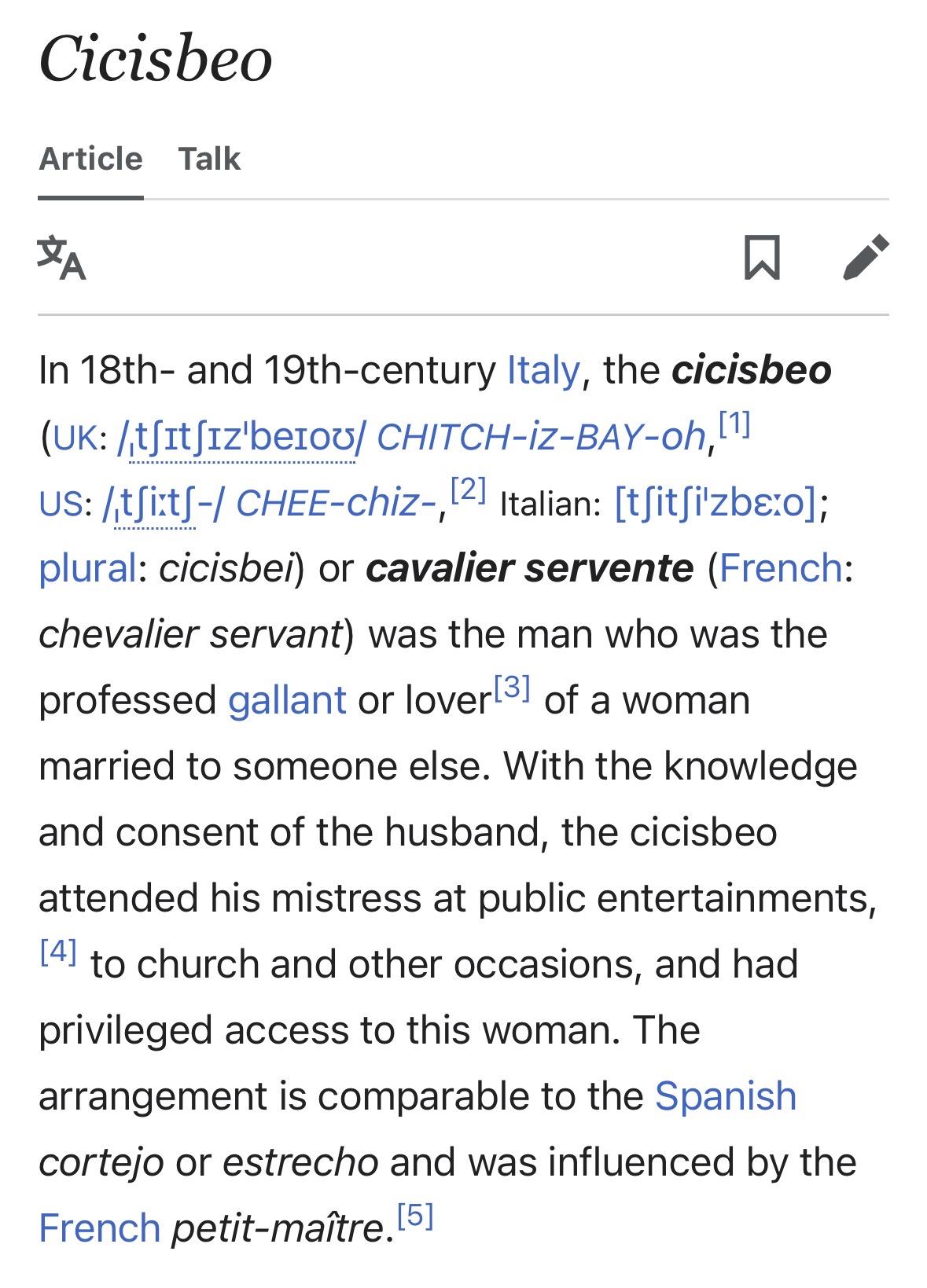
alt In 18th- and 19th-century Italy, the cicisbeo (UK: /ˌtʃɪtʃɪzˈbeɪoʊ/ CHITCH-iz-BAY-oh,[1] US: /ˌtʃiːtʃ-/ CHEE-chiz-,[2] Italian: [tʃitʃiˈzbɛːo]; plural: cicisbei) or cavalier servente (French: chevalier servant) was the man who was the professed gallant or lover[3] of a woman married to someone else. With the knowledge and consent of the husband, the cicisbeo attended his mistress at public entertainments,[4] to church and other occasions, and had privileged access to this woman. The arrangement is comparable to the Spanish cortejo or estrecho and was influenced by the French petit-maître.[5] In 18th- and 19th-century Italy, the cicisbeo (UK: /ˌtʃɪtʃɪzˈbeɪoʊ/ CHITCH-iz-BAY-oh,[1] US: /ˌtʃiːtʃ-/ CHEE-chiz-,[2] Italian: [tʃitʃiˈzbɛːo]; plural: cicisbei) or cavalier servente (French: chevalier servant) was the man who was the professed gallant or lover[3] of a woman married to someone else. With the knowledge and consent of the husband, the cicisbeo attended his mistress at public entertainments,[4] to church and other occasions, and had privileged access to this woman. The arrangement is comparable to the Spanish cortejo or estrecho and was influenced by the French petit-maître.[5]
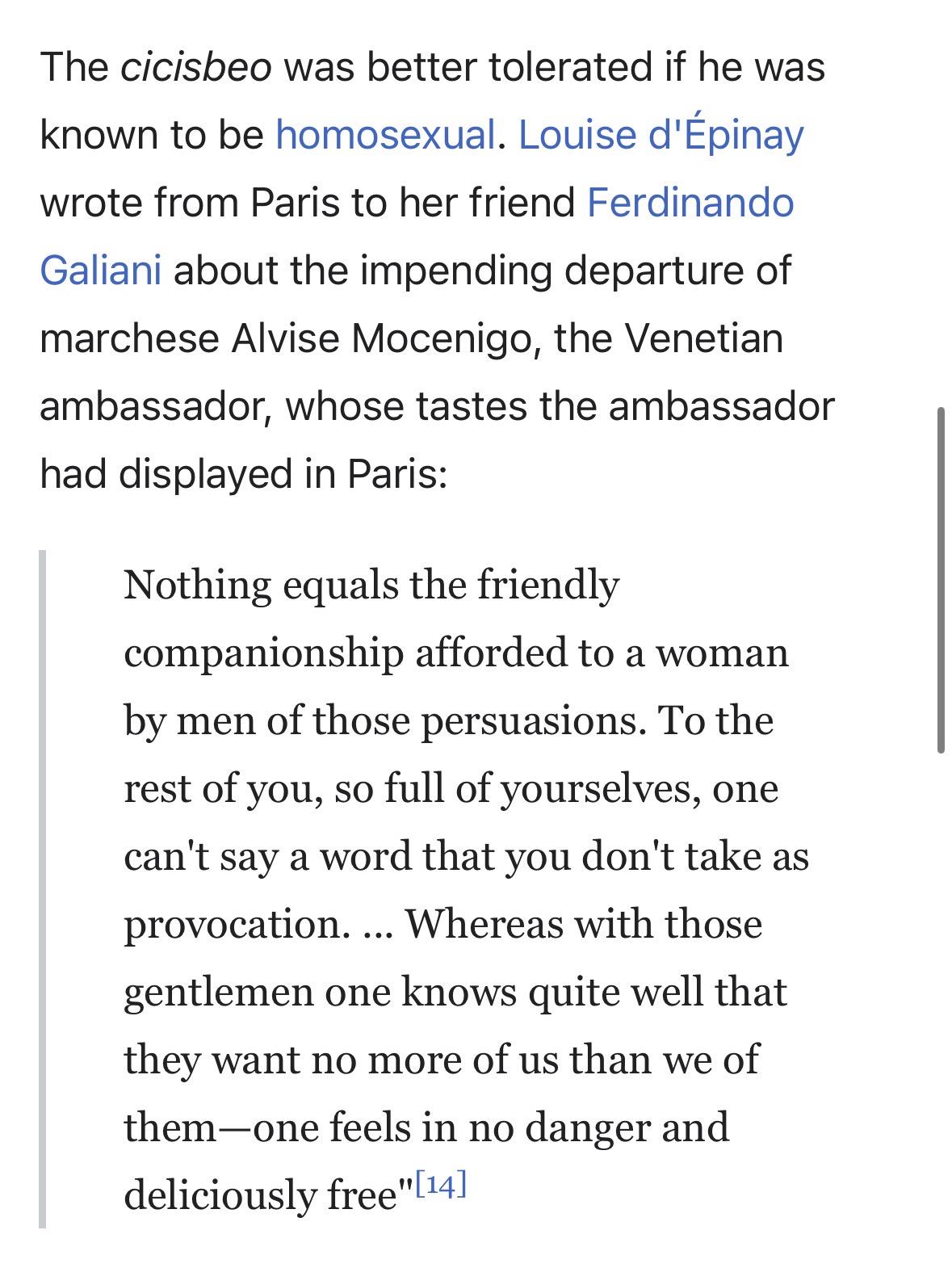
alt The cicisbeo was better tolerated if he was known to be homosexual. Louise d'Épinay wrote from Paris to her friend Ferdinando Galiani about the impending departure of marchese Alvise Mocenigo, the Venetian ambassador, whose tastes the ambassador had displayed in Paris: Nothing equals the friendly companionship afforded to a woman by men of those persuasions. To the rest of you, so full of yourselves, one can't say a word that you don't take as provocation. ... Whereas with those gentlemen one knows quite well that they want no more of us than we of them—one feels in no danger and deliciously free"[14] The cicisbeo was better tolerated if he was known to be homosexual. Louise d'Épinay wrote from Paris to her friend Ferdinando Galiani about the impending departure of marchese Alvise Mocenigo, the Venetian ambassador, whose tastes the ambassador had displayed in Paris: Nothing equals the friendly companionship afforded to a woman by men of those persuasions. To the rest of you, so full of yourselves, one can't say a word that you don't take as provocation. ... Whereas with those gentlemen one knows quite well that they want no more of us than we of them—one feels in no danger and deliciously free"[14]