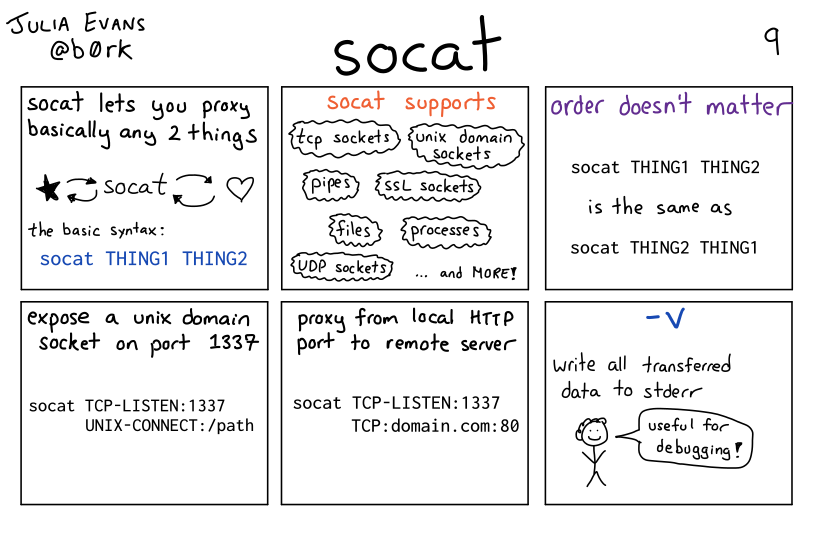
### `socat` lets you proxy basically any 2 things
Diagram of a star, a heart, and the word "`socat`". There are arrows going to and from `socat` to the heart and star.
the basic syntax:
`socat THING1 THING2`
### socat supports:
- tcp sockets
- unix domain sockets
- pipes
- SSL sockets
- files
- processes
- UDP sockets
- ... and MORE!
### order doesn't matter
`socat THING1 THING2`
is the same as
`socat THING2 THING1`
### expose a unix domain socket on port 1337
```
socat TCP-LISTEN:1337
UNIX-CONNECT:/path
```
### proxy from local HTTP port to remote server
```
socat TCP-LISTEN:1337
TCP:domain.com:80
```
### `-v`
write all transferred data to `stderr`
happy little stick figure: useful for debugging!