Indio Gringo ® @paninid@mastodon.world · activity timestamp 7 mo. ago #Stress vs #Burnout Read more Read less Translate Translate alt STRESS VS. BURNOUT SIGNS YOU'RE BURNED OUT Burnout often begins with subtle cognitive and emotional shifts before progressing into physical and behavioral symptoms; warning signs may include: • Feeling like every day is a bad day • Believing that caring about your work is pointless or a waste of energy • Constant exhaustion, even after rest • Viewing tasks as either overwhelming or mind-numbingly dull • Thinking that nothing you do makes a meaningful difference • Persistent physical fatigue and low energy • Growing cynicism, irritability, or detachment • Feelings of uselessness or diminished professional efficacy • Symptoms of depression or emotional numbness • Sleep disruption or insomnia • Frequent headaches or gastrointestinal distress • Increased reliance on alcohol or other substances to cope • A noticeable rise in sick days or absenteeism If left unaddressed, burnout is associated with significant health risks, including cardiovascular disease, high blood pressure, Type 2 diabetes, and increased susceptibility to illness. STRESS VS. BURNOUT SIGNS YOU'RE BURNED OUT Burnout often begins with subtle cognitive and emotional shifts before progressing into physical and behavioral symptoms; warning signs may include: • Feeling like every day is a bad day • Believing that caring about your work is pointless or a waste of energy • Constant exhaustion, even after rest • Viewing tasks as either overwhelming or mind-numbingly dull • Thinking that nothing you do makes a meaningful difference • Persistent physical fatigue and low energy • Growing cynicism, irritability, or detachment • Feelings of uselessness or diminished professional efficacy • Symptoms of depression or emotional numbness • Sleep disruption or insomnia • Frequent headaches or gastrointestinal distress • Increased reliance on alcohol or other substances to cope • A noticeable rise in sick days or absenteeism If left unaddressed, burnout is associated with significant health risks, including cardiovascular disease, high blood pressure, Type 2 diabetes, and increased susceptibility to illness. #stress #burnout Reply Boost Quote Like More actions Copy link Share View remotely Get latest replies Flag this post Block
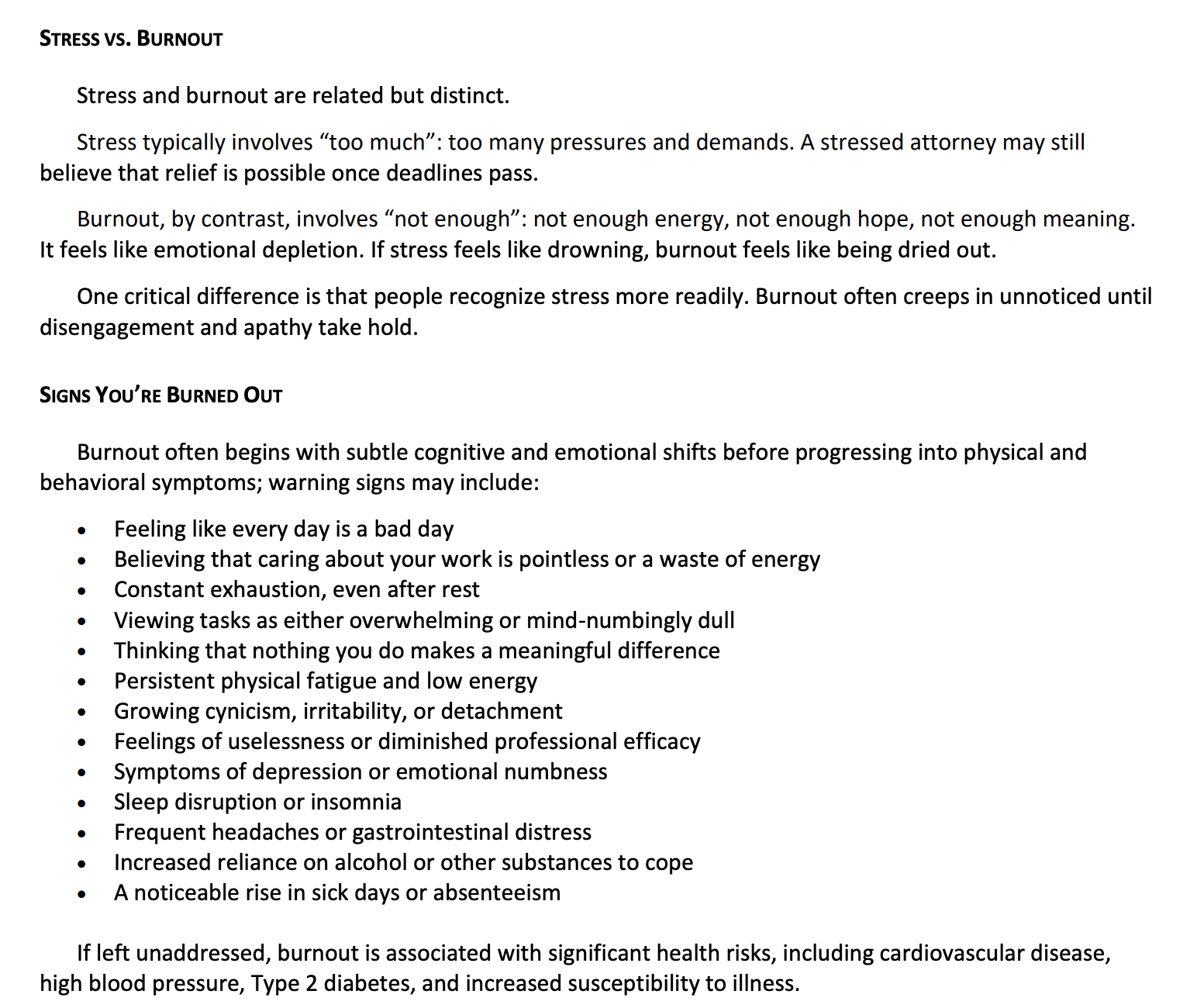
alt STRESS VS. BURNOUT SIGNS YOU'RE BURNED OUT Burnout often begins with subtle cognitive and emotional shifts before progressing into physical and behavioral symptoms; warning signs may include: • Feeling like every day is a bad day • Believing that caring about your work is pointless or a waste of energy • Constant exhaustion, even after rest • Viewing tasks as either overwhelming or mind-numbingly dull • Thinking that nothing you do makes a meaningful difference • Persistent physical fatigue and low energy • Growing cynicism, irritability, or detachment • Feelings of uselessness or diminished professional efficacy • Symptoms of depression or emotional numbness • Sleep disruption or insomnia • Frequent headaches or gastrointestinal distress • Increased reliance on alcohol or other substances to cope • A noticeable rise in sick days or absenteeism If left unaddressed, burnout is associated with significant health risks, including cardiovascular disease, high blood pressure, Type 2 diabetes, and increased susceptibility to illness. STRESS VS. BURNOUT SIGNS YOU'RE BURNED OUT Burnout often begins with subtle cognitive and emotional shifts before progressing into physical and behavioral symptoms; warning signs may include: • Feeling like every day is a bad day • Believing that caring about your work is pointless or a waste of energy • Constant exhaustion, even after rest • Viewing tasks as either overwhelming or mind-numbingly dull • Thinking that nothing you do makes a meaningful difference • Persistent physical fatigue and low energy • Growing cynicism, irritability, or detachment • Feelings of uselessness or diminished professional efficacy • Symptoms of depression or emotional numbness • Sleep disruption or insomnia • Frequent headaches or gastrointestinal distress • Increased reliance on alcohol or other substances to cope • A noticeable rise in sick days or absenteeism If left unaddressed, burnout is associated with significant health risks, including cardiovascular disease, high blood pressure, Type 2 diabetes, and increased susceptibility to illness.