


Whoah BC, what the heck have you done?




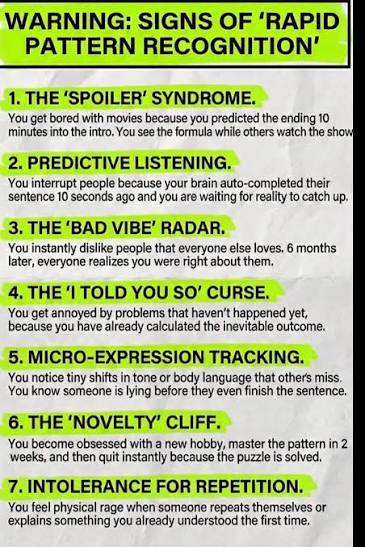
Um, feeling seen...
 Posted in
Fediverse memes
jet@hackertalks.com
liked this activity


KDE Plasma 6.8: No More X11, Union theming, and a TON of changes!
Ferengi Rule of Acquisition 10
"Greed is eternal."
Source: Prophet Motive (VOY episode)
bob
boosted


Rassemblement | Ce 23 octobre, un attentat raciste était perpetré à #Trappes et La Verrière. Face à l'horreur, en soutien aux victimes et pour dénoncer la banalisation de la haine raciste, la #LDH et de très nombreuses organisations appellent à un large rassemblement ce lundi 26 octobre à Paris, pl. Stalingrad, 19h, et partout en France.

Tonight on Deep Space 9
Odo and the other senior officers welcome a group of alien German board game enthusiasts aboard for first contact but can't remember the last 24 hours.
 Posted in
Fediverse
hitagi
liked this activity

some feedback about Lemmy/PieFed from Reddit users
I’ve tried both [Lemmy and PieFed], and the UX is incredibly unintuitive and unpleasant. The main problem is that it’s quite hard to discover content you want while avoiding content you don’t, Bluesky at least has really good custom feeds that are easy to add (the default feed sucks). Another big issue is the general site layout, it’s hard to figure out how to do things as simple as saving a post for later or how to go back to the feed without being redirected back to the post I’m trying to exit.
Maybe they didn’t see the “Feeds” feature in PieFed? The top navigation menus in PieFed are a bit messy. Although shareable blocklists could be cool too, or maybe toxic?
That’s excluding the horrible lack of contrast most frontends use, which makes reading and parsing the site elements unnecessarily difficult (no Lemmy, grey text on a grey background is not good for readability).
I like the Lemmy colors, but maybe it should be easier to change, because they might like the darkly-pureblack theme.
Fediverse feels slower, but not in a good way. More of a ‘if I don’t use this for a week, I’ll see new things’. If I log in after 2 or 3 days, I’ll scroll for 10 minutes and see the stuff I saw last time.
Maybe this is a UX issue of not finding the right feed they would like.
I also want nsfw stuff now and then. I hate how censored the internet has become, at least with reddit if I want to see a bit of porn, I can.
Again maybe a UX issue of not presenting what communities they could subscribe to.
I tried twice to join those forums within the Fediverse and I can’t get past the captcha test. The fact that you need approval to validate your access doesn’t seem designed to encourage you to recommend it.
The captchas on Lemmy are AWFUL, I can’t do them either.
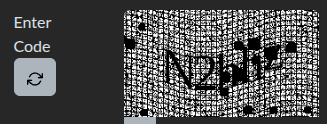
(that’s the “Medium” difficulty)
Lemmy v1.0 is adding the ability to do invites, so maybe there will be an invite-only instance that gets some momentum, that could be cool. Invite sites seems like a cool old-internet type of culture.
The fediverse stuff is way too complicated for me, Reddit is very easily accessible and actually has active communities for the topics I’m interested in.
Of course these are naturally going to be all negative because they’re users that bounced off the Threadiverse, but there’s probably hints to what can be improved


There's no intrinsic necessity for their "AI" in this world. Remember that we did fine without it, or if not exactly fine, then at least no worse than today.
I'm a bit nonplussed that this would work at all, after all it depends on a collective act of credulity and *amnesia*.
If "AI" is now vital for the simplest tasks, how did we manage 3 years ago?
Anyone pushing its use in the workplace, in institutions, anywhere owes me an answer to this.
There is none. Only gaslighting.

Happy Pointless Clock Change Day.
or
Happy Your Oven Clock Is Now Correct For A While Day.


@neil oven clock now correct: that's _exactly_ the conversation which happened in our kitchen today! ^5
Posted in
Fediverse
hitagi
liked this activity

Enabling Sensitive Conversations with Consent Boundaries: Moa, a Platform for Discussing PhD Advising Relationships [as a testcase] | Proceedings of the ACM on Human-Computer Interaction
I think this is a really interesting example of how the Fediverse has so much potential that goes far beyond the visions of social media that Corporations and rightwing extremist billionaires could ever provide us.
Yes a great use of a social media platform, if structured well and locally moderated by human beings, could absolutely be useful for certain cases like this in a way that would be superbly difficult to arrange otherwise.
Individuals who suffer from problematic power dynamics, such as mistreatment or abuse from someone in power, can benefit from identifying allies, whether it is to seek advice or remedial action. Here, we use the word “ally” to refer to any individual who is sympathetic and can offer some kind of help, ranging from sharing useful information to actively navigating the situation together. Example contexts include workplace bullying [91], political persecution [57], and sexual harassment [23]. In contexts where potential allies are initially unknown, however, someone must make at least a partial disclosure of their experience for what we call ally discovery1 to succeed. But, disclosure is risky because the exact conditions under which these situations arise heighten concerns of exposure and retaliation [3, 21]. That is, one cannot know whom to trust about an issue until one discloses being affected by it; yet one cannot disclose before knowing whom to trust.
Some of the most helpful information in navigating problematic power dynamics can come from individuals who share similar traits regarding the context, e.g., women working with the same manager. How can we facilitate the flow of information in such situations, so that individuals who need it most can discover allies while maintaining one’s anonymity? We consider this problem in the context of PhD students experiencing advising challenges. Because the advising relationship is fraught with power dynamics and ripe for exploitation [14, 47, 54, 80], ally discovery is critical for enabling students to connect with peers who might offer advice or partnership toward remedial action. Yet, research shows that ally discovery within the same PhD program can be difficult [24, 27].
…
Social media platforms are typically structured around a predefined network (e.g., followers) or space (e.g., group) [92]. In contrast, Moa focuses on the question: “How does each user want to design their audience per post or comment?” As a result, Moa does not implement any network model nor does it include user profile pages (REQ3).4 Furthermore, instead of letting users have access to the same content if they are in the same space, Moa’s users see different sets of posts (and comments) depending on their own and others’ consent boundaries (Section 4.2). In terms of the Form-From matrix [92], we believe Moa is closest to a Threaded Space, but consent boundaries considerably weaken both the threading and the space.
…
Taking a consent-centered approach was essential to developing Moa. While consent and privacy are closely related, there is a subtle difference in emphasis. Speaking strictly from an engineering standpoint, consent boundaries are like privacy settings—they give different permissions to different sets of users. But, they differ from traditional privacy settings with respect to the categories of user-sets that can be formed, the granularity of control, and most importantly, the way the categories align with users’ own preferences for control. Below, we reflect further on how consent differs from privacy, and what consent means for system development.
To begin, privacy is a fuzzy concept—scholars disagree on how exactly to define it, though definitions cluster around themes such as the right to be left alone, restriction of access, secrecy, control over personal information, personhood, and intimacy [77]. One relevant ambiguity in the context of computing is about who provides privacy: Privacy can be conferred to a user by the user themselves, or by a privacy-protecting system.
In contrast, the essence of consent is that it is strictly user-determined. The only entity who can grant an individual’s consent is the individual herself; there is no definition of “consent” in which a system can grant itself consent to do something to a user that the user does not herself wish to allow. Thus, relying on the term “privacy” can obscure the central role of the user, as privacy encompasses multiple, often ambiguous meanings. Arguably, the reason why “user-centered privacy” is a term distinct from general privacy is because the user-centeredness of privacy is not a given. Yet, even within the usable privacy and security community, discussions of consent have been limited to the notice-and-choice paradigm [13]. Consent is not cast as a foundational principle for system design.
Based on this view, systems frequently define privacy options in advance (i.e., the system is conferring some privacy), with users only able to accept or decline them. In practice, these options are often difficult to find or understand, further limiting true user consent. For instance, many of Facebook’s privacy settings are often hidden [30].
As the feminist affirmative consent framework recommends [35],14 consent should not merely be a mechanism for relaxing privacy constraints, but a foundational principle of design: individuals affected by an action should have the agency to define exactly what their consent boundary is, in the way that they conceive as relevant to a particular context.
…
Currently, Moa is maintained by the lead author in order to minimize privacy risks. Running the platform with 47 users turned out to be feasible—the lead author was diligent in moderating and seeking user feedback, and no incidents of abuse or negative feedback occurred. However, how could Moa and the concept of consent boundaries scale?
One way to scale is having multiple instances of Moa, one per organization or group, each with its own administrator, similar to Mastodon. This approach reflects an important assumption that local system admins are important for earning users’ trust, which was confirmed by our Phase 3 study. And, just as research shows that Reddit’s moderators have their own network of giving each other support [9], we imagine that there should be a support network for Moa’s administrators and moderators. This would ensure that each instance is not entirely isolated, and that when sensitive incidents happen, there would be cross-instance resources on how to resolve them.
It is possible to imagine building Moa as a larger, monolithic platform such as Facebook or Reddit, but we imagine even on such a platform, communities would have their own moderators—each trusted by their respective communities—who are empowered to provide the kind of meaningful oversight over identity that the Moa prototype included. For this study, it was easy for users to verify and understand that the moderator was also a PhD student in the same institution. At larger scale, there would need to be a process for selecting such moderators, and proving their identity to other members of the community.
In terms of consent boundaries, they are likely to be applicable to other contexts beyond PhD advising, such as among workplace employees [18, 67], survivors of sexual misbehavior by one group of people [16, 48], or potential whistleblowers at the same organization [19].
One aspect of the Moa prototype described in this paper was that there was an implicit consent boundary formed by the community of PhD students from the same institution—no user needed to consider whether their content would be revealed to non-students. Communities could be formed much like Slack’s channels around different topics, though additional mechanisms such as member-sponsored invitations to join or formal background checks would be required to ensure that community members satisfy membership requirements.
We also imagine consent boundaries could be used in general platforms such as Facebook or Reddit, likely in less sensitive contexts. Consent boundaries could help users carve out a group of people they want to interact with, without having to designate a particular space or network [92]. 6
 Posted in
Political Memes
auzy1@lemmy.world
liked this activity

Their only experience is themselves, and their friends. And they assume everyone is like them. The projection is real with right wingers.
Superficial busywork can now be slopped. So what. This just means we get to do more of it.
Other work can now also be slopped. Does the resulting slopworld feel productive? Does it feel like progress?
Whole fields are threatened, with education being undermined by those who want to replace all knowledge work, expertise, creativity and really everything that matters with plastic replicas.
What a great future!
There's no intrinsic necessity for their "AI" in this world. Remember that we did fine without it, or if not exactly fine, then at least no worse than today.
What is happening to the Linux kernel, Bitwarden and Epic Games? - Linux Weekly News


Oh no 
Oh, one last chip.
That I can do.


@bici lol. You’re not owed anything. You want a party with separatists and homophobes, you vote for them. It’s a free country. But don’t come crying to me when you realize your mistake like a US Republican who thought Trump was just a joke.


The world going from “lmao QR codes” to “QR codes literally everywhere” has been very strange to experience.


@aurynn COVID saved the QR code
I wonder what life would be like if I had a schedule that fit my sleep schedule. 🕑
