

A technique born in Mesopotamia 4,500 years ago that only the Etruscans perfected.
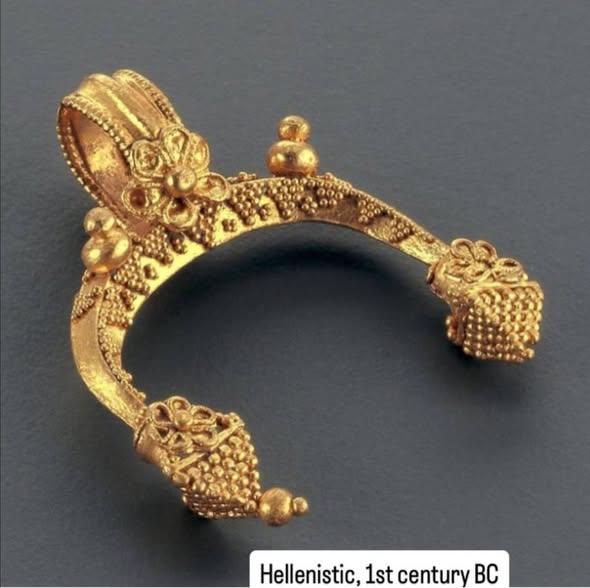
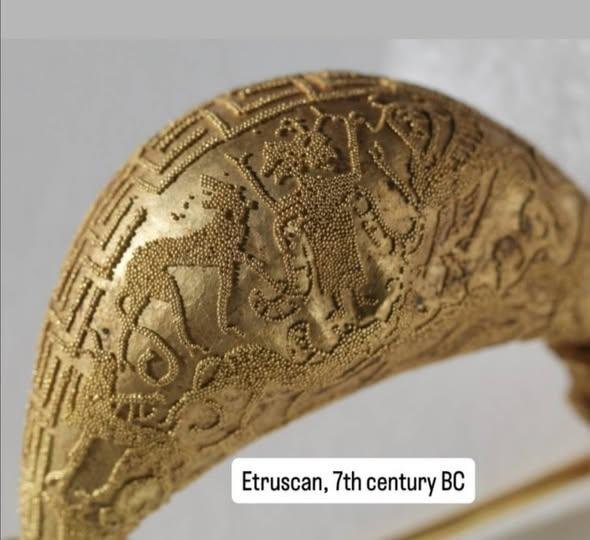
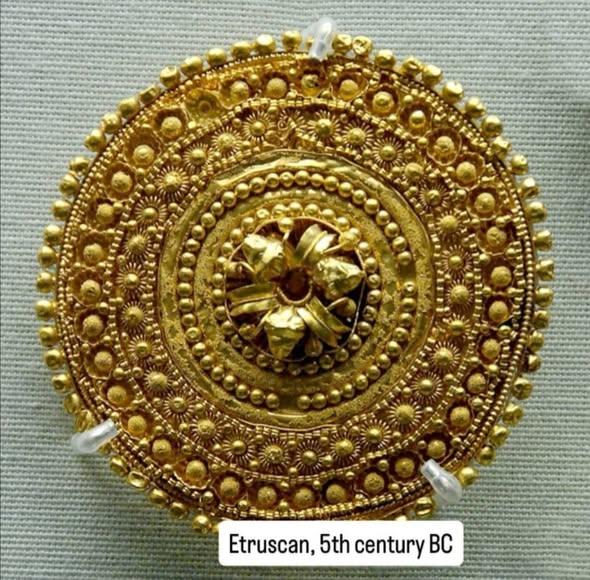
Etruscan granulation is a refined goldsmithing craft that involved soldering tiny gold spheres—each about the thickness of a human hair—onto a metal sheet to create geometric patterns or figures.
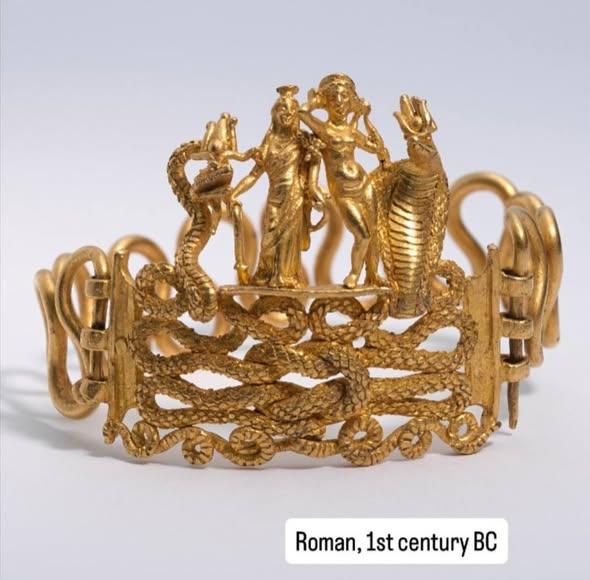
This art form originated in Mesopotamia over 4,500 years ago and spread along the trade routes of the Mediterranean and the Near East, being adopted by several great ancient civilizations before reaching the Etruscans.
4 media files

The secret behind their invisible soldering was even recorded by the Roman writer Pliny the Elder.
In his Naturalis Historia, he described the use of chrysocolla (literally "gold glue," a copper mineral) mixed with organic substances like fish glue or gum arabic.
This paste held the tiny spheres in place before firing; inside the kiln, the carbon burned away and the copper chemically bonded with the gold at around 900 °C (1,650 °F).