
2 media files
0 Boosts
0 Likes
@cohanf
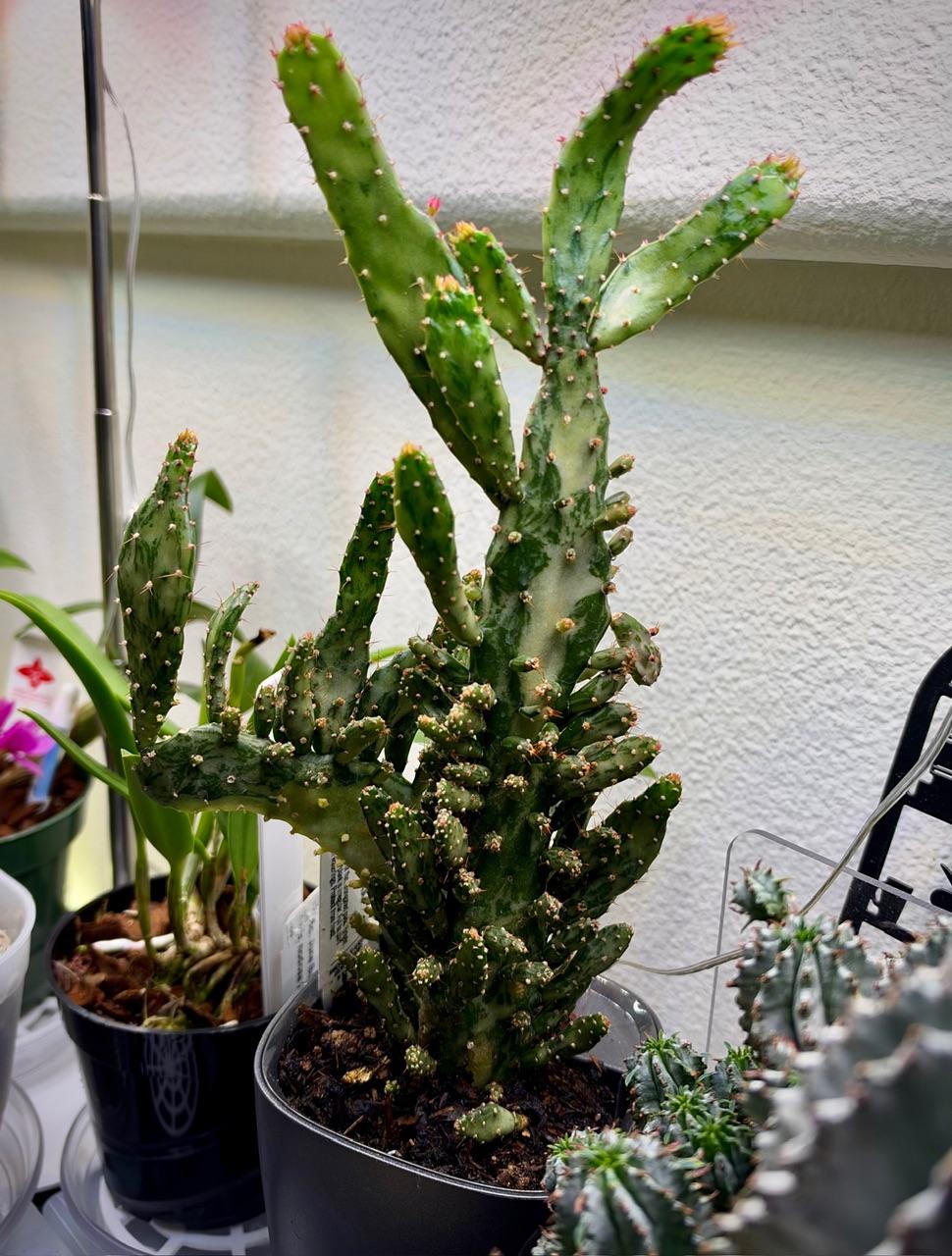
Thanks! I had no idea. It’s such a strange plant that I kind of thought it was another succulent. Also surprised I haven’t killed it yet with the self-watering pot. 


@sollat They are kind of weird aren't they? (that's the fun, of course..lol) I think the natural forms would already be odd, then horticulture selects extra weird forms and colours.. There are a some Opuntioids (+ another similar group) that even have small persistent leaves, and even a genus in another subfamily- Pereskia- that look like regular woody, leafy shrubs (if a bit thorny or slightly succulent).
@sollat I just did some reading (since it's been years since I was following cactus theory closely) and interestingly, there is debate- even after some molecular and genetic study in recent decades- as to whether those cacti with leaves represent the early state of cacti, or whether in fact they started as small leafless succulents and those with leaves developed them later!
@cohanf
The look of it was quite surprising at the nursery. I’ll try anything once. These three sit nearest to the heater, keeping weird company.
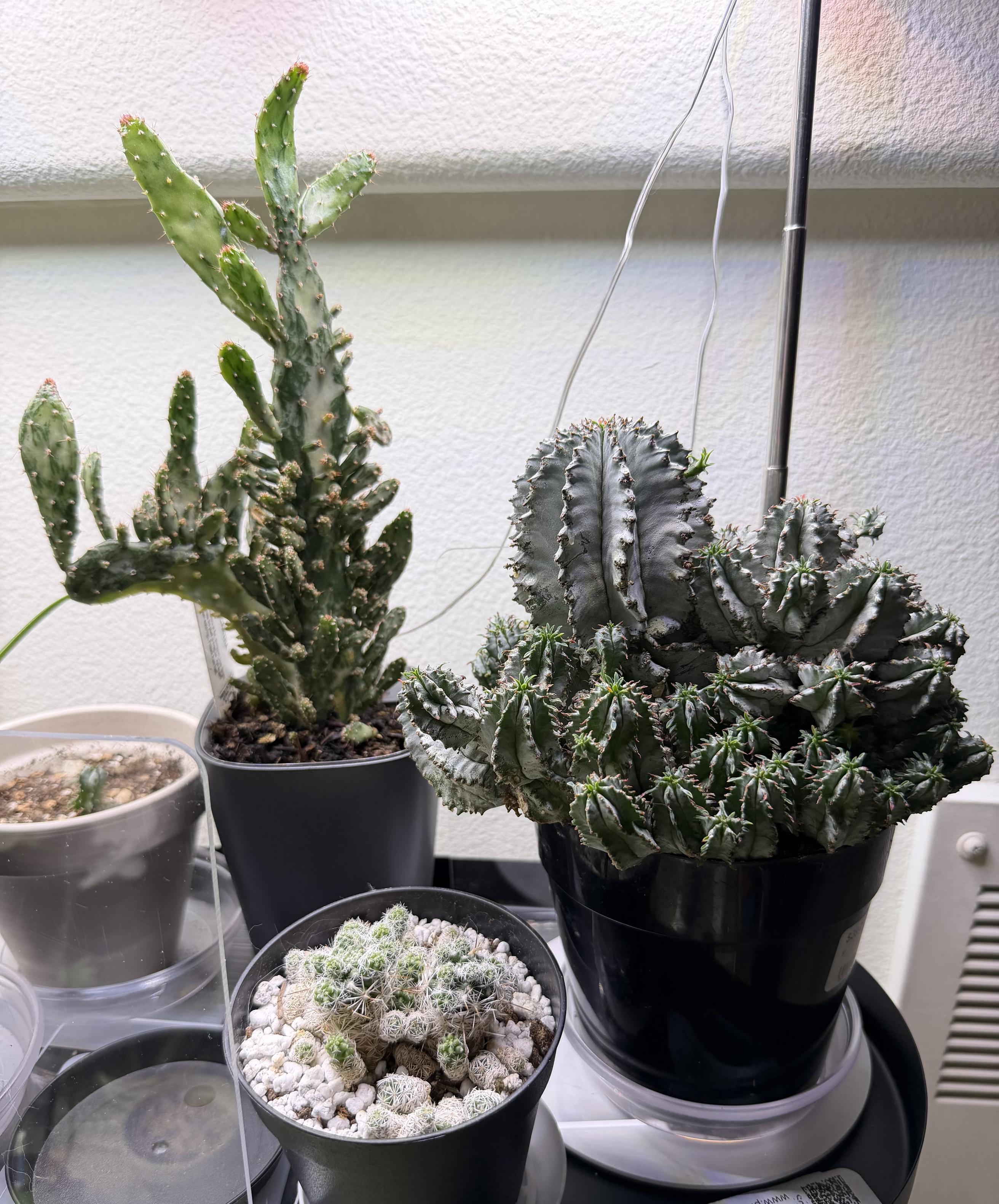
@sollat Nice ones-- that Euphorbia looks great 😊 I would look up the growing cycle for each of these if you haven't already. That Opuntia is clearly making some growth-- *most* cacti are winter dormant at which time you should water little if at all (depending also on temps). Often flowering (unlikely for Opuntias indoors, but maybe the Mammillaria) is dependent on a winter rest. Succulents like the Euph are all over the map with growing cycles, you have to research each.
@sollat These are all high light intensity plants so just watch for any hint of etiolation. My rule of thumb would be if there is natural light they should all be as close as possible (if it were only natural light in winter, you wouldn't water much), and depending on the kind of artificial light, they might need to be with a handful of cm from it. So far looking good :)

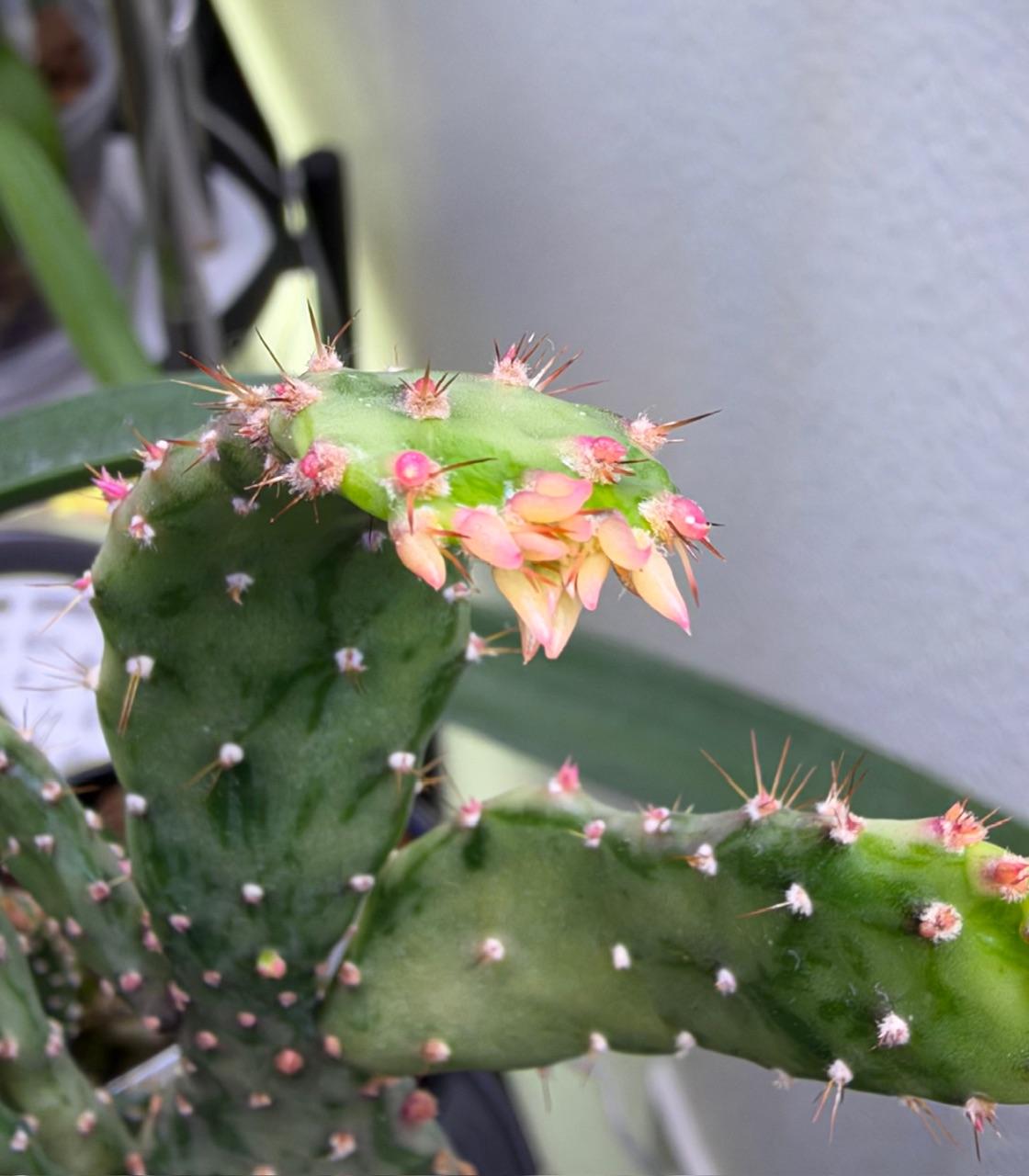
@sollat fun to see 😊 You probably already know those are vestigial leaves which many Opuntia grow temporarily on new growth (the pads are stems, not leaves).